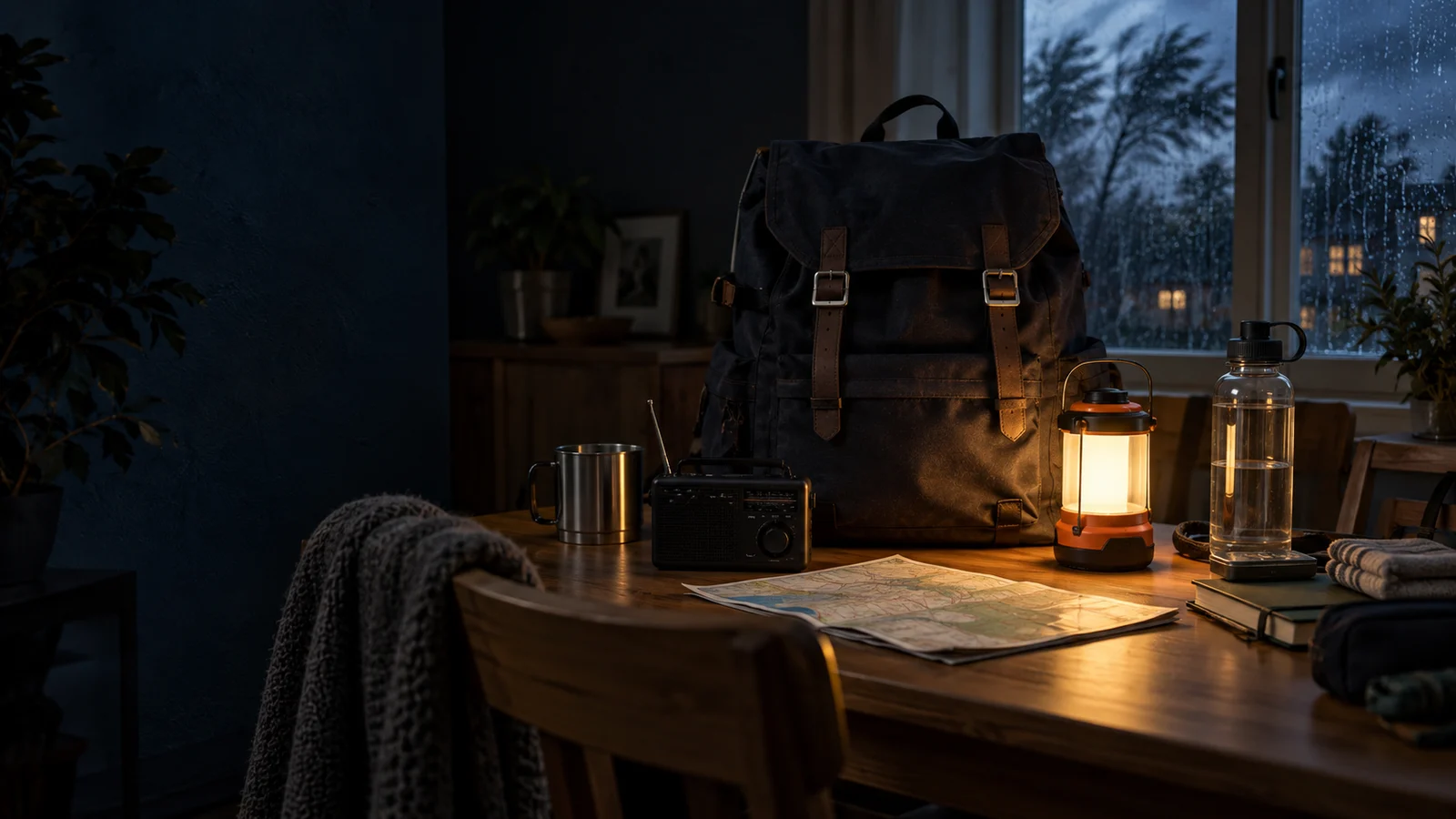
72-hour kit · Go bag · Disasters · Long-term
Ready is calmer than worried.
Three days without water, power or a phone network: that is what FEMA asks every household to be able to handle on its own. This site explains how to get there in a weekend, in what order, with the official sources — and without buying what you will never use.
No guns, no bunkers, no doomsday. An ordinary household, prepared methodically.
72 h
At home, no power, no water
The kit FEMA asks every household to keep, worked out for yours: water, light, radio, meals, first aid.
10 min
Leaving the house
The go bag that fits in a trunk, and the family plan everyone actually knows.
D-3 → D+3
A disaster with a warning
Hurricane, flood, heat wave, wildfire: what to do before, during and after, hour by hour.
1 month
When it lasts
Food storage, backup power, heat without electricity, documents: long-haul self-reliance, without a bunker.
The long guides
Four horizons, each taken all the way.
There is no shortage of knife comparisons online. What is missing is the arithmetic: how much water, what to pack, what to do two days out from a hurricane, how to stay warm when the power is gone.
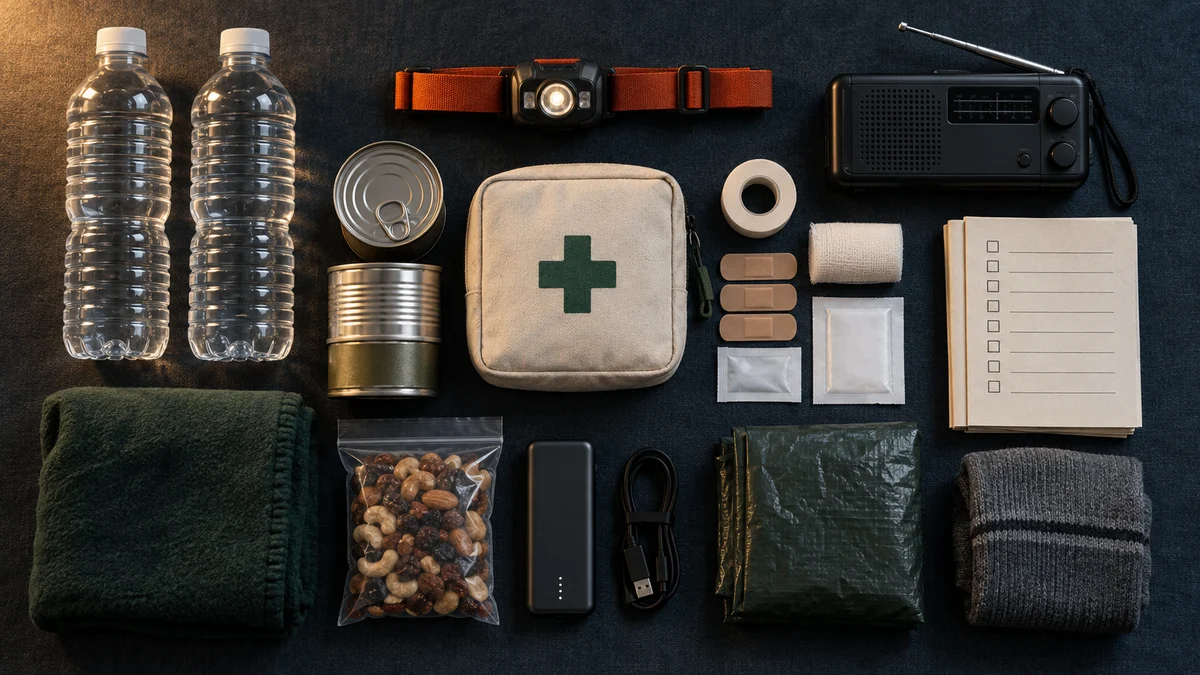
72-Hour Emergency Kit: The Complete Household Guide
Ready.gov asks every household to be able to get through several days without outside help, and then stops short of saying how much of anything. This guide does the arithmetic, post by post, for the number of people and animals who actually live in your house.
Read the guide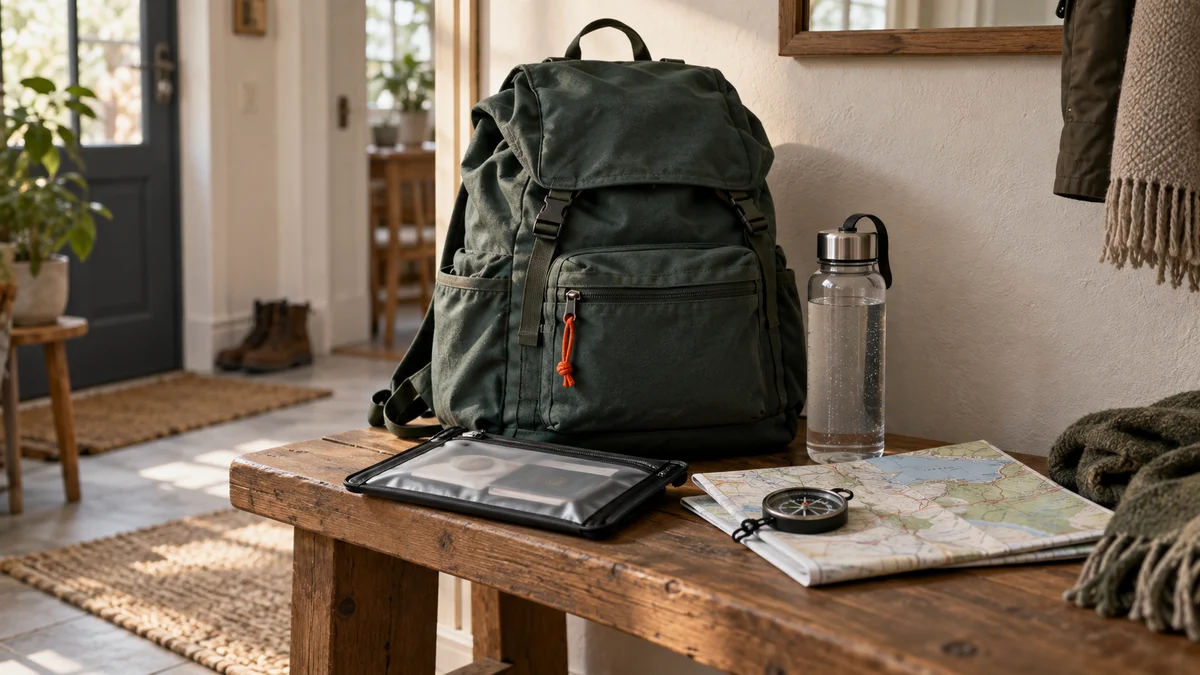
Go Bag: The Complete Guide (List, Weight, Plan)
A go bag is not a survival kit: it is what lets you walk out the door in three minutes without leaving behind anything that matters. This guide sets what it holds, what it may weigh, where it lives, and what shape your household has to be in before the order to leave arrives.
Read the guide
Natural Disaster Preparedness: The Household Guide
Hurricane, tornado, flood, wildfire, winter storm, heat: every household has one hazard that comes first, and it is not the same on the Gulf Coast as it is in a third-floor apartment in Chicago. This guide finds yours, then works through what follows from it — the alerts, the three days before, the three days after, the house, and the insurance nobody reads until the water is already in the living room.
Read the guide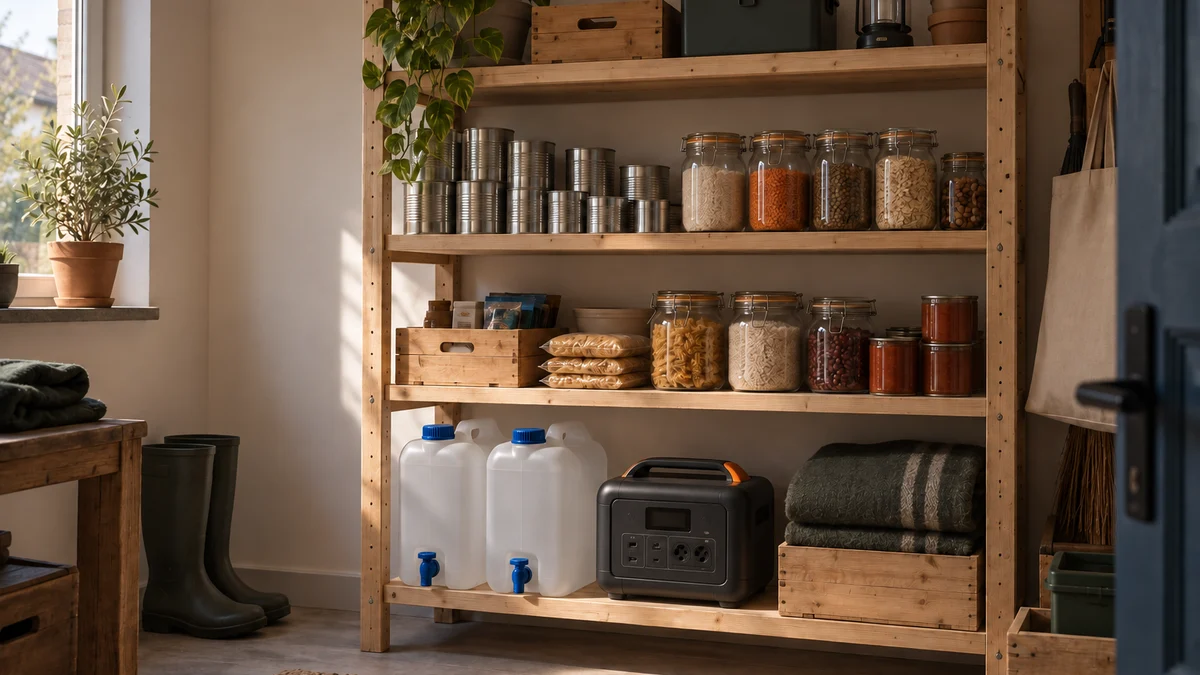
Long-Term Emergency Preparedness Without the Bunker
Federal guidance tells American households to be ready to survive on their own for several days, and stops there. This guide takes the next step honestly: what changes in a house when the outage runs two weeks or a month instead of three, post by post, with the arithmetic shown.
Read the guideChecklists, numbers and plain answers
The questions you ask the night before
September 21, 2026
72 Hour Kit Checklist: Every Line, Counted
The 72 hour kit checklist, counted for your own household: gallons, meals, lights, batteries, the seven lines people leave out, and where it all fits at home.
September 21, 2026
Backpacking Water Filter vs Purifier: What Each Removes
Backpacking water filter: what a 0.1-micron membrane stops, what slips straight through, and which of six technologies fits your trip. The sizes, from the CDC.
September 21, 2026
Emergency Water Storage: How Much, Where, How Long
Emergency water storage, sized and drawn: gallons per person, which containers fit where, the six-month rule, and how to keep it drinkable. Start this weekend.
September 21, 2026
Emergency Weather Radio: How to Choose One That Wakes You
An emergency weather radio earns its shelf only if it wakes you at 2 a.m.: NOAA All Hazards, SAME coding, tone alert, battery backup. Compare before you buy.
September 21, 2026
Everyday Carry Essentials: The Five That Matter
Everyday carry essentials: the five items worth adding to your phone, keys and wallet, what each one weighs, and why the rest of EDC is a hobby. Build yours.
September 21, 2026
Extended Power Outage: What to Do, Hour by Hour
An extended power outage fails in stages: hour 0, hour 4, hour 24, hour 72. What breaks at each one, what to do, what to keep or throw out. Start your clock.
Why trust this
Baptiste S.
Founder and writer · bs-media
I am not a firefighter, a paramedic or a survival instructor. I am someone who read his government's household preparedness guide cover to cover, lives where winter storms knock the power out every year, and decided to do the work properly: read the official guidance, run the numbers, compare the spec sheets, and write down what I wish I had found. This site sells neither fear nor bunkers. It explains what an ordinary household can put together in a weekend, and in what order.
- 01 I start from official guidance — FEMA, Ready.gov, the National Weather Service, the CDC, the American Red Cross — and I link to it. If I have not checked it, I do not write it.
- 02 No guns, no bunkers, no doomsday: this site prepares an ordinary household for three days, two weeks, a month.
- 03 I say what is not worth buying, including the things that sell best in survival stores.
- 04 On health, medication and electrical work, I defer to your doctor, your pharmacist or a licensed electrician. That is not my job.